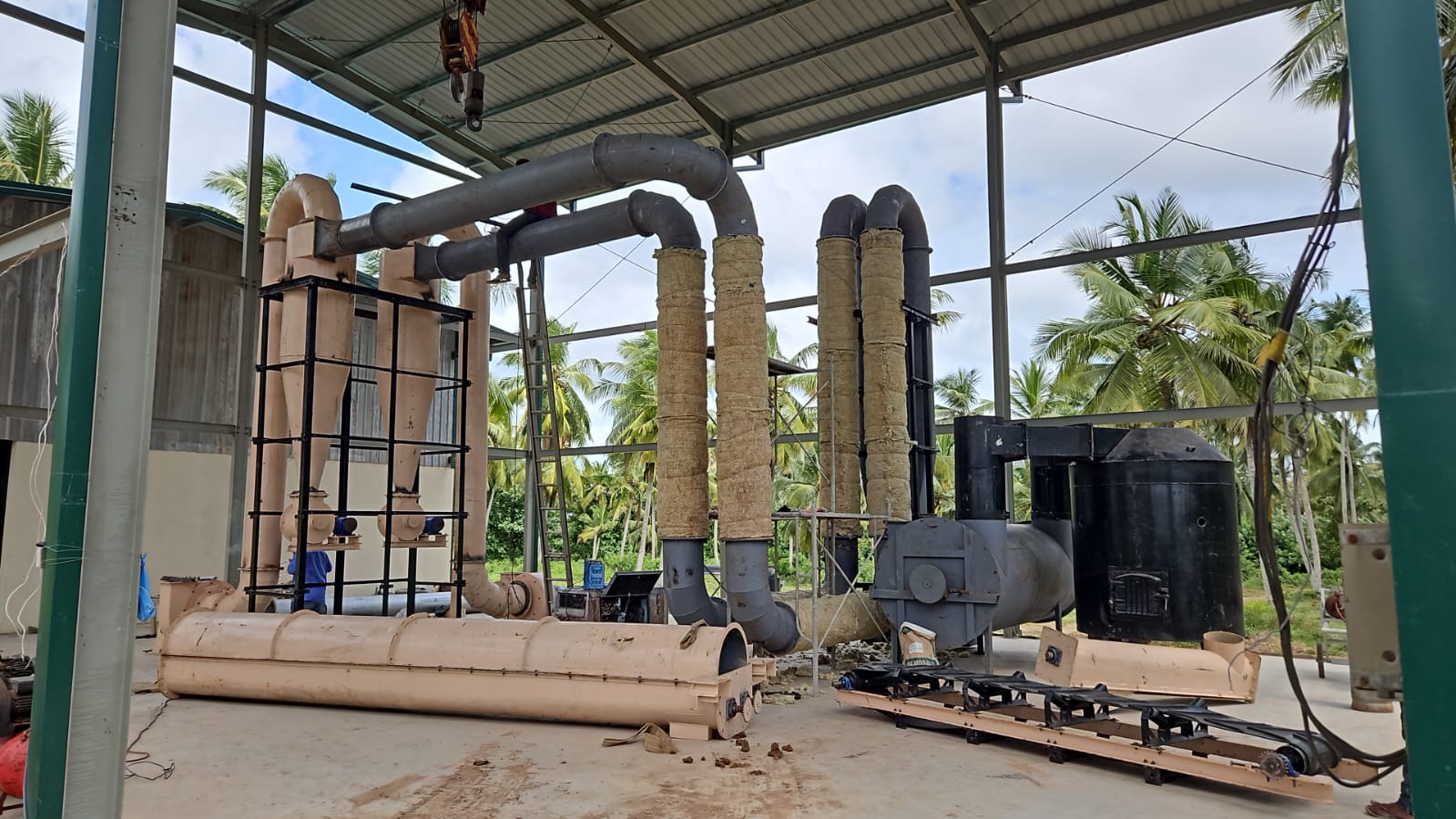
What happens inside a gasifier?
Biomass passes through drying, pyrolysis, oxidation and reduction processes within the reactor. A controlled air supply allows part of the material to react and provide the heat needed for conversion. The resulting producer gas is directed to the intended application.
Why feedstock preparation matters
Moisture, particle size, bulk density and ash characteristics influence how a material behaves in the reactor. Different gasifier designs suit different feedstocks. Describe the material and its expected variation before selecting a system; preparation may be needed to make the feed consistent.
Match gas treatment to the application
The required gas handling, particulate removal and cooling arrangements depend on the gasifier and how the gas will be used. Thermal applications and engines can have different requirements. The engineering design should address the complete path from fuel storage to the point of use.
Plan for reliable operation
A practical installation needs space for fuel handling, ash removal and maintenance, as well as suitable controls and trained operators. Share the process heat demand, operating schedule and site conditions with the engineering team so the proposed system can be assessed as a complete installation.